
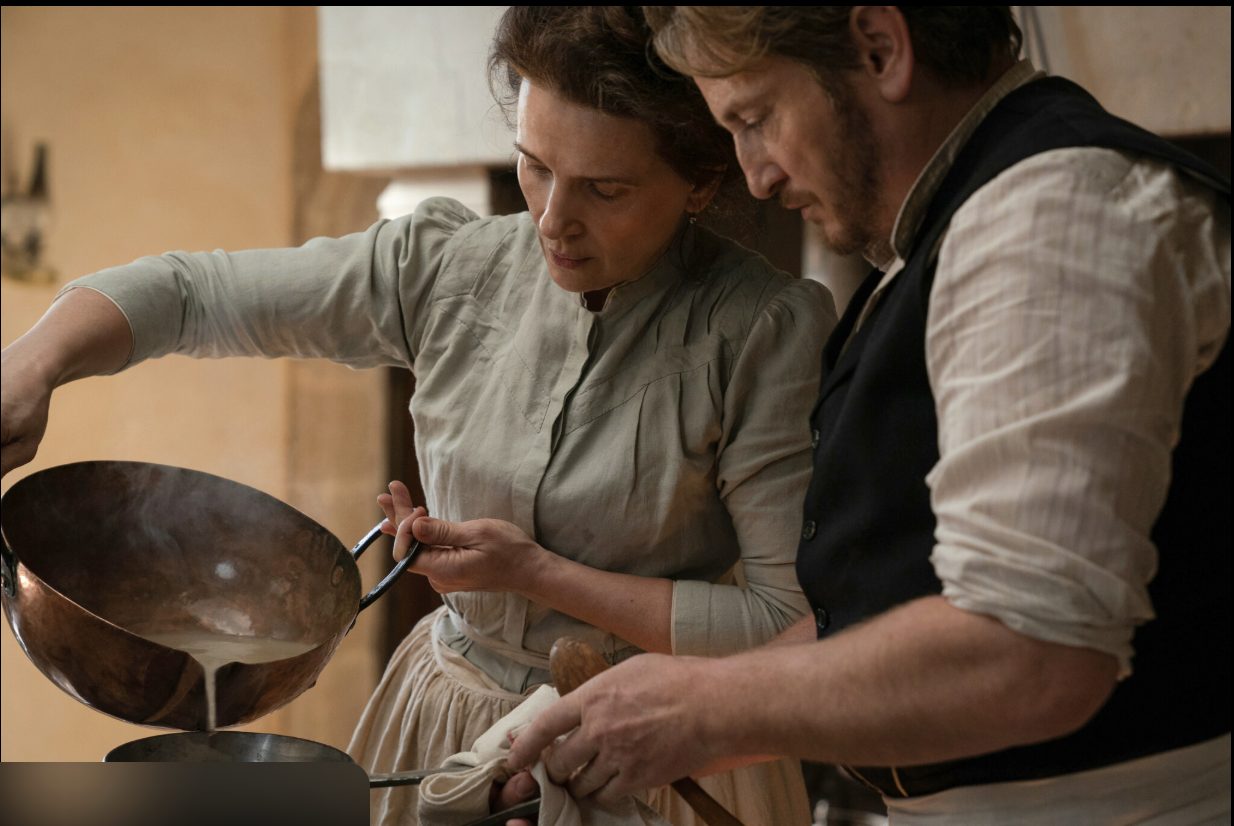
Recently, I finally found the time to watch The Taste of Things. It wasn’t a film I was eagerly waiting for; rather, it was one of those that remain in the background until the right moment arrives. When that moment finally came, I realized almost immediately that I wasn’t simply watching it, but recognizing something deeply familiar.
From the opening scenes, a strong sense of familiarity emerged. That persistent—at times almost obsessive—care for food reflected something that has always belonged to me: the daily search for the right ingredients. Not the rarest or most celebrated ones, but instead those that make sense in a specific moment in time. Such ingredients exist because someone imagined them, cultivated them, and patiently waited for them.
For this reason, care for food reveals itself as a daily choice.
Throughout the film, every gesture in the kitchen is shaped by absolute attentiveness. Nothing appears rushed, and nothing suggests accumulation. On the contrary, everything unfolds in respect for time and matter. This kind of care does not need to be explained, because it becomes visible through movement, waiting, and quiet precision.
The same attentiveness, however, guides me when I choose people even before products. Understanding how something was imagined, cared for, and allowed to mature before reaching me often matters more than the object itself. At certain moments, this care for food means moving forward; at other times, it means stopping and accepting that the moment is not yet right.
This approach has nothing to do with perfectionism. Instead, it is rooted in respect and in the ability to listen.
In this sense, love appears without declarations.
Within The Taste of Things, love is never openly stated. Instead, it takes shape through repeated gestures, constancy, and shared silences. At one point, it becomes clear that a truly successful dish needs no explanation. Elsewhere, cooking every day for the same person quietly turns into an act of fidelity that asks for no confirmation.
As a result, an idea of love emerges that does not seek to impress, but to endure. This form of love moves through doing rather than saying, through presence rather than promise. Much like food treated with care, there is no need to astonish; being faithful to what it is proves sufficient.
Therefore, the value of a shared meal becomes evident.
As the film unfolds, food reveals itself as far more than matter to be transformed. It becomes relationship and shared time, taking the shape of a form of care that begins long before the kitchen and continues well beyond the meal.
Eating together, in fact, means slowing down and inhabiting the same time. Presence matters more than what arrives on the plate. Sitting beside one another—without haste and without distractions—turns a simple dinner into a profound way of caring for another person.
At this point, the transition from viewing to practice feels natural.
The same idea of care for food lies at the heart of the work we carry forward every day at Experience Food. When we began imagining a line of tasting boxes dedicated to Valentine’s Day dinner, the intention was not to create a conventional celebration, but to design a moment meant to be truly lived.
Preparing a box, moreover, involves careful choices, respect for time, and attention to who will eventually sit at the table. It offers the possibility to cook slowly, to share a thoughtful gesture, and to transform dinner into a space of genuine intimacy where food becomes language.
A dinner prepared with love.
Ultimately, a dinner prepared with love is never just a gastronomic experience. It represents time intentionally devoted to another person, as well as the thought that comes before the gesture. In this way, it becomes a silent way of saying, “I was thinking of you.”
For this reason, The Taste of Things gently reminds us that love—the kind that endures—does not rely on grand declarations. Rather, it depends on presence, attentiveness, and listening. Very often, such love begins quietly: in a silent kitchen, with a dish prepared with respect, and with a meal eaten slowly beside the person we choose every day.
Leave a Reply