
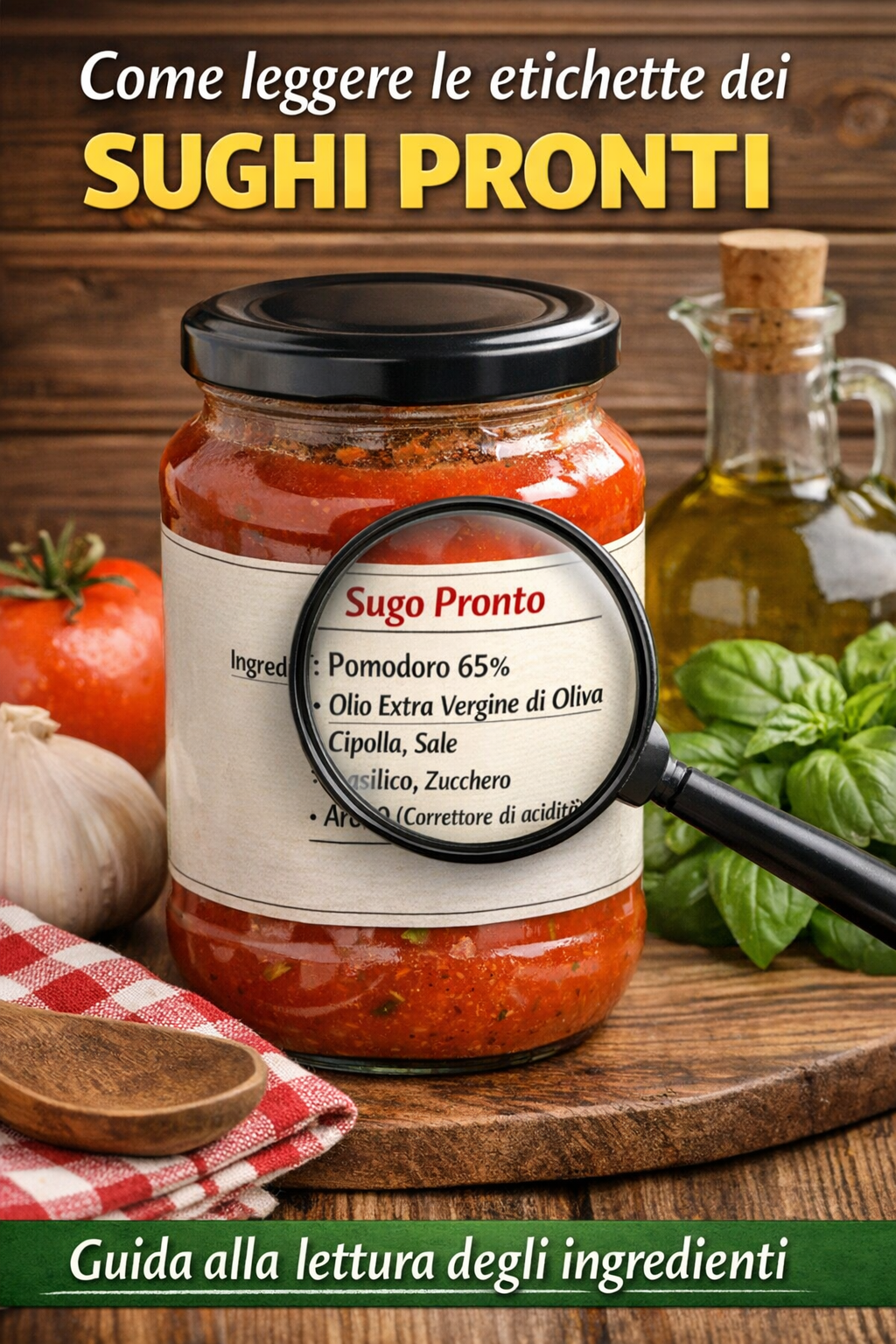
Knowing how to read ready-made sauce labels is one of the most effective ways to assess their quality. Beyond the product name or packaging, the ingredient composition provides the most relevant information about how the sauce is made and processed.
Understanding how to correctly interpret a label helps distinguish simpler, more authentic products from more complex formulations. More and more consumers are looking for artisanal ready-made sauces that offer genuine quality and recognizable ingredients.
Ingredient Order: What It Really Means
Ingredients are listed in descending order by quantity, from the highest amount to the lowest.
This means that:
- the first ingredient is the one present in the largest quantity
- the following ingredients are included in progressively smaller amounts
In a tomato sauce, for example, it is generally preferable to find tomatoes listed as the first ingredient, followed by simple and recognizable components:
- tomatoes as the first ingredient
- extra virgin olive oil among the first ingredients
- flavorings and spices listed toward the end
If secondary ingredients appear at the top of the list, the recipe may be less balanced and less aligned with a simple, high-quality formulation.
Presence of Technological Additives
Some ingredients found in ready-made sauces serve a technological function related to texture, preservation, or flavor consistency.
- modified starches → used as thickeners
- acidity regulators → help balance pH levels
- flavorings → contribute to flavor standardization
These elements are not necessarily negative, but their presence can indicate a more industrial formulation and a greater level of processing.
- a high presence of these ingredients may indicate a greater level of processing
- the role of the primary ingredients may become less significant
In simpler products, flavor mainly comes from the core ingredients rather than from added technological components or flavor enhancers.
Types of Fats Used
The type of fat used affects both the flavor and the overall quality perception of a ready-made sauce.
It is generally preferable to find:
- extra virgin olive oil
Rather than:
- generic vegetable oils
- unspecified oil blends
Ingredient Specificity
An important factor is the level of detail used to describe the ingredients on the label.
For example:
- “Italian tomatoes” is more specific than simply “tomatoes”
- “porcini mushrooms” is more precise than just “mushrooms”
The more specific the ingredient description, the greater the transparency regarding the product’s composition and sourcing.
Length of the Ingredient List
The length of the ingredient list can be a useful indicator, although not an absolute one.
In general:
- shorter ingredient lists → usually indicate a simpler recipe
- longer ingredient lists → may suggest a greater level of technological processing
How to Choose a Ready-Made Sauce Based on the Label
For a quick evaluation, it is useful to consider:
- ingredient order
- presence and function of additives
- types of fats used
- clarity and specificity of the ingredients
If you want to understand how to apply these criteria in practice, you can also read the guide on common mistakes in ready-made sauces.
Where to Find Carefully Selected Ready-Made Sauces
If you want to discover products evaluated according to these criteria, you can explore the category dedicated to artisanal ready-made sauces or read the guide to the best ready-made pasta sauces to see concrete examples of selected products.
Leave a Reply